If you've ever handed someone a business card that felt slightly too big for their wallet, or worse, ordered a print run only to discover your design didn't fit the standard cutting template, you already know why getting the size right matters. In Malaysia, business card dimensions follow a fairly consistent standard, but there's more nuance to it than most business owners realise. Whether you're a startup founder in Kulai or an established company in Johor Bahru reordering cards for a new hire, this guide breaks down exactly what you need to know before you hit print.
The Standard Business Card Size in Malaysia
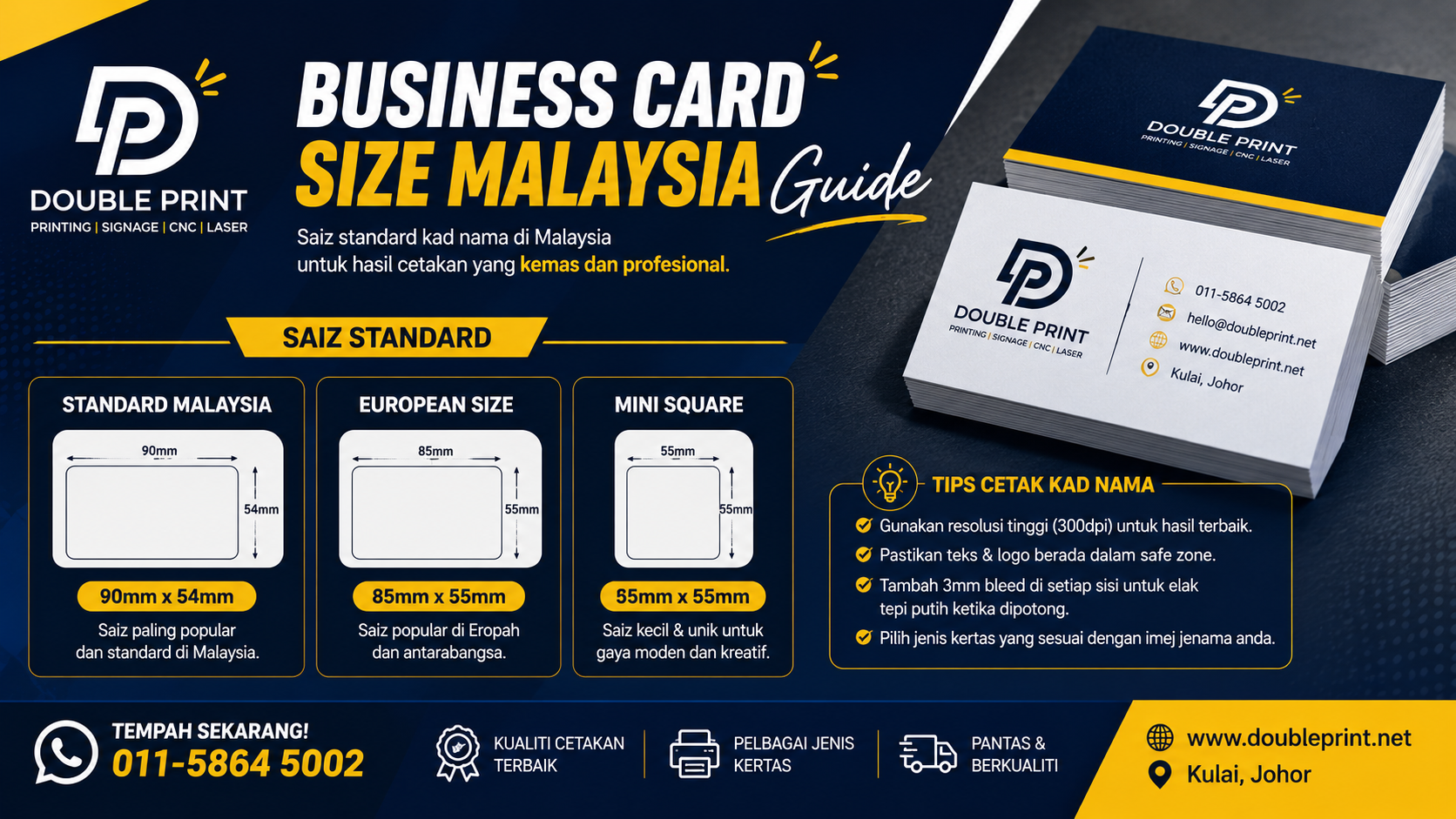
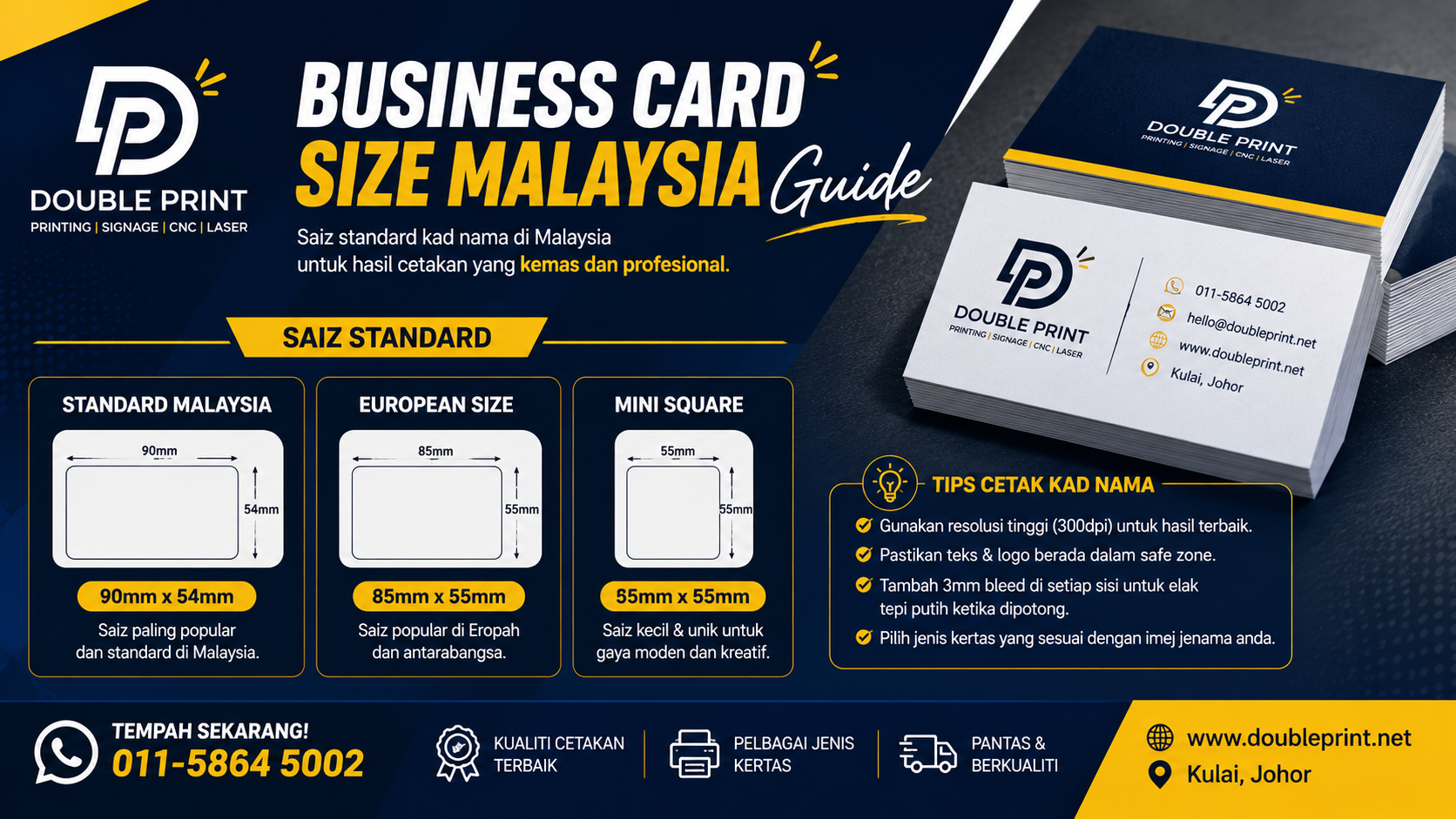
The most widely used business card size in Malaysia is 90mm x 54mm. This is the de facto standard across the country, matching the size used throughout much of Asia, including Singapore, Hong Kong, and mainland China. It's slightly larger than the American standard (89mm x 51mm) and noticeably bigger than the European standard (85mm x 55mm).
Why does this matter? Because if you're using a template downloaded from an overseas source or a generic design tool without adjusting the dimensions, your final printed card may look slightly off, either too cramped or with awkward white space once trimmed to local size.
Why 90mm x 54mm Became the Norm
This size struck a practical balance: large enough to hold a logo, name, title, contact details, and sometimes a QR code, yet compact enough to fit comfortably into wallets, card holders, and shirt pockets. Over decades of local business culture, it became the unspoken standard that printers, designers, and corporate procurement teams all default to.
Common Alternative Sizes You Might Consider
While 90mm x 54mm dominates, there are situations where a different size makes sense, particularly for brands wanting to stand out or serve a specific niche.
- 85mm x 54mm (Rounded corners): A near-standard size often chosen for a softer, more premium feel, especially with rounded corner finishing.
- 90mm x 50mm: A slightly shorter card that some designers prefer for a leaner, more modern aesthetic.
- Square cards (55mm x 55mm or 60mm x 60mm): Popular among creative agencies, photographers, and boutique brands wanting to visually differentiate from typical corporate cards.
- Mini cards (70mm x 28mm): Occasionally used for QR-code-only cards or supplementary contact cards handed out alongside a primary card.
The trade-off with non-standard sizes is practical: unusual dimensions may not fit standard card holders, binders, or scanning apps optimised for the 90mm x 54mm format. If your clients frequently store cards in traditional card wallets, sticking with the standard size ensures your card doesn't get folded, bent, or discarded simply because it doesn't fit.
Bleed, Safe Zone, and Trim: What Designers Often Miss
Size isn't just about the final cut dimension. Every business card design needs to account for three critical zones:
- Trim size: The final size after cutting (typically 90mm x 54mm).
- Bleed area: An extra 2-3mm extension beyond the trim line on all sides, ensuring that background colours or images extend fully to the edge without leaving unwanted white slivers after cutting.
- Safe zone: A margin of at least 3-5mm inside the trim line where all important text and logos should sit, protecting against minor shifts during the cutting process.
Many first-time business owners submit designs without bleed, resulting in a thin white border around the edges once trimmed. A good print house in Johor will usually flag this before printing, but it's worth checking your file setup in advance to avoid delays.
Material and Finish Considerations for Malaysian Businesses
Size is only half the equation. The material and finish you choose also affect how your card is perceived and how it holds up over time in Malaysia's humid climate.
Popular Card Stocks
- Art card (260-300gsm): The most common choice, offering a smooth surface ideal for full-colour printing.
- Textured cardstock: Linen or felt textures add a tactile, premium feel, often chosen by law firms, consultants, and luxury brands.
- Plastic/PVC cards: Waterproof and highly durable, increasingly popular for F&B businesses and outdoor-facing roles where cards may get exposed to moisture.
Finishing Options
- Matte lamination: Reduces glare, gives a sophisticated look, and resists fingerprints.
- Gloss lamination: Enhances colour vibrancy, ideal for cards with bold graphics or photography.
- Spot UV: Adds selective glossy highlights over logos or text for a premium, dimensional effect.
- Foil stamping: Gold, silver, or rose gold foil accents for a luxury finish, popular with real estate agents and high-end service providers.
A Quick Buyer's Checklist Before You Print
- Confirm you're using 90mm x 54mm unless you have a specific reason to deviate.
- Check your design file includes 2-3mm bleed on all sides.
- Keep text and logos at least 3-5mm from the trim edge.
- Choose a cardstock weight of at least 260gsm for a substantial feel.
- Decide on finishing (matte, gloss, or spot UV) based on your brand positioning.
- Proofread contact details, especially phone numbers and email addresses, before submitting for print.
- Order a small test batch first if this is your first print run with a new design.
Ordering Business Cards in Kulai and Johor
For businesses based in Kulai, Johor Bahru, or greater Johor, working with a local print house has real advantages: faster turnaround, the ability to physically check a printed proof before a full run, and support from a team that understands regional business norms. Whether you need a small batch of 100 cards for a new venture or a bulk corporate order across multiple departments, getting the size, material, and finish right the first time saves both money and reprint headaches.
At Double Print, we produce business cards to the standard 90mm x 54mm size as well as custom dimensions, with a full range of cardstocks and finishing options to match your brand. If you're ready to design or reprint your business cards, get in touch with our team in Kulai for a quick quote and expert guidance on file setup, material choice, and finishing, so your card makes the right impression every time it's handed over.
Notes from the press floor at Double Print, Kulai. We print, cut, engrave and craft for businesses across Johor and beyond. Send us a brief.